

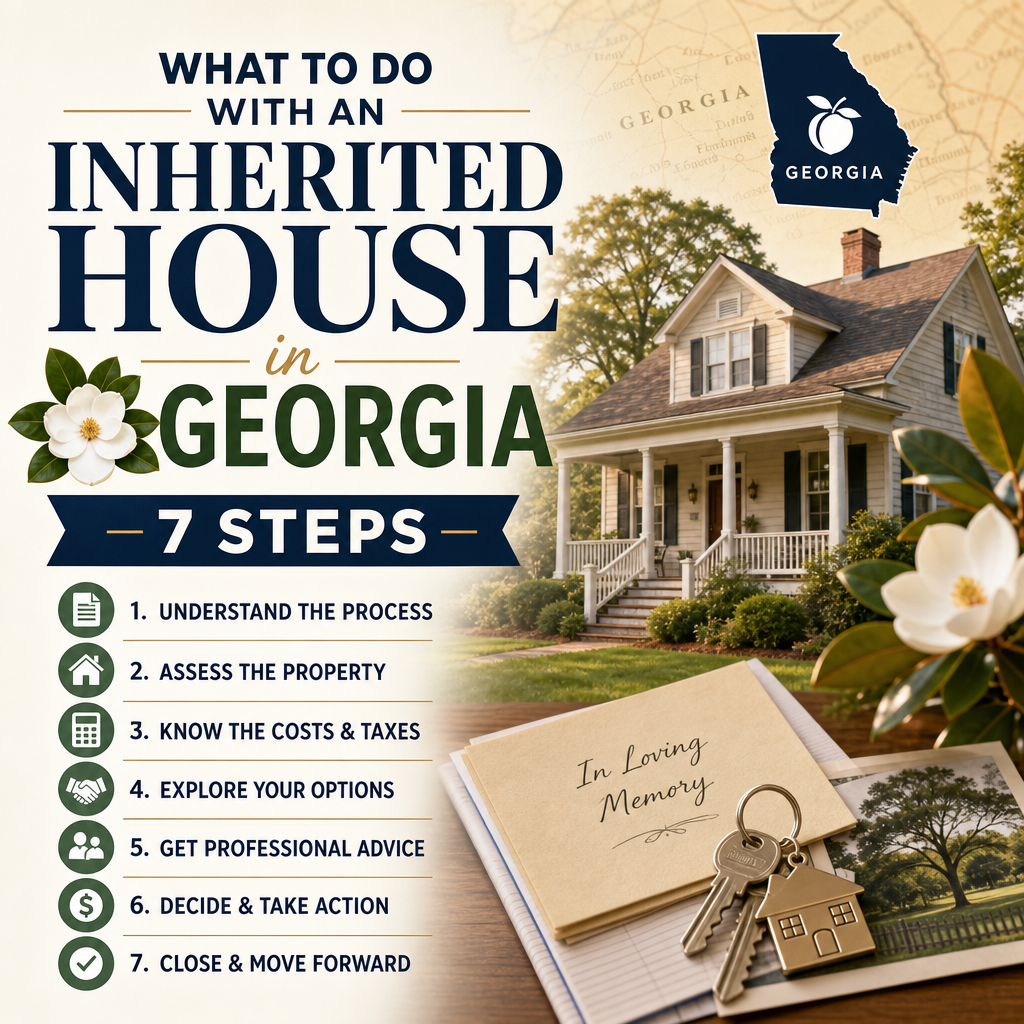
What to Do With an Inherited House in Georgia: 7 Steps
What To Do With an Inherited House in Georgia: Your First 7 Steps
Inheriting a house can feel like a blessing, but it often comes with stress, paperwork, and a lot of decisions. If you’re wondering what to do with an inherited house in Georgia, the best approach is to slow down and follow a clear process.
Whether you plan to keep the property, rent it out, or sell it, these first seven steps can help you protect the home, avoid costly mistakes, and understand your options.
1. Confirm Who Legally Inherited the Property
Before making any decisions, make sure you know who actually owns the house now. In Georgia, property does not always transfer automatically just because someone passed away.
You may need to check:
- The will, if there is one
- The probate court records
- The deed and title status
- Whether the home is in a trust or jointly owned
If multiple heirs are involved, ownership may be shared. That means everyone may need to agree before the house can be sold or transferred. A probate attorney can help clarify the legal situation if anything is unclear.
2. Secure the House Right Away
An inherited home can sit vacant for weeks or months, which makes it vulnerable to theft, vandalism, weather damage, and utility issues. One of your first priorities should be securing the property.
Take these steps quickly:
- Change the locks if allowed
- Make sure windows and doors are shut and locked
- Collect mail and stop obvious signs the house is empty
- Check smoke detectors, water leaks, and electrical safety
- Keep the lawn mowed and the exterior maintained
If the home is in a neighborhood with an HOA, make sure you continue following community rules to avoid fines.
3. Find Out What Debts or Liens Are Attached
A house may come with more than memories. It can also come with a mortgage, unpaid property taxes, liens, or other claims. Before you decide whether to keep or sell the home, determine what financial obligations are attached to it.
Look for:
- An existing mortgage balance
- Delinquent property taxes
- Homeowners association dues
- Contractor liens or unpaid bills
- Utility balances that may need to be settled
If the mortgage is still active, contact the lender immediately. You do not want to miss payments while sorting things out. Federal rules often give heirs protections, but it is still important to communicate with the lender early.
4. Check the Condition of the Property
An inherited house in Georgia may look fine at first glance, but hidden problems can be expensive. Before making a final decision, do a thorough inspection of the interior and exterior.
Pay attention to:
- Roof damage
- Foundation cracks
- Water damage or mold
- HVAC problems
- Plumbing and electrical issues
- Pest infestations
- Age of major systems and appliances
If the house has been vacant, even minor issues can get worse over time. A professional inspection can help you understand the true condition and estimate repair costs. That information will be useful whether you plan to occupy, rent, or sell the home.
5. Review the Insurance and Tax Situation
Once you inherit a house, insurance coverage may change. A homeowner’s policy that was in the deceased owner’s name may no longer be enough, especially if the home is vacant. Contact the insurance company as soon as possible to confirm coverage.
You should also review:
- Property taxes
- Homestead exemption status
- Insurance premiums
- Special assessments or local fees
Georgia property taxes vary by county, so make sure you know when the taxes are due and whether any exemptions need to be updated. Missing a tax deadline can create unnecessary penalties and interest.
6. Decide Whether to Keep, Rent, or Sell
After you understand the legal, financial, and physical condition of the home, you can make a practical decision. Most heirs choose one of three paths.
Keep the House
This may make sense if:
- You want to live there
- The mortgage is manageable
- The home is in good condition
- The property has sentimental value
Rent the House
This may be a smart option if:
- The home is in a strong rental market
- You can cover maintenance and management costs
- You want long-term income instead of a quick sale
Sell the House
This is often the simplest option if:
- The house needs major repairs
- There are multiple heirs who want to divide proceeds
- You do not want the responsibility of owning a second property
If you are unsure, compare the cost of repairs, taxes, insurance, and upkeep against the likely rental income or sale price.
7. Get Professional Help Before You Move Forward
Handling an inherited property is rarely simple, especially if probate, title issues, or multiple heirs are involved. Getting the right help early can save time and money.
Useful professionals may include:
- A probate attorney
- A real estate agent familiar with inherited properties
- A title company
- An accountant or tax professional
- A home inspector or contractor
These experts can help you avoid common mistakes, especially if you plan to sell quickly or divide proceeds among family members.
Final Thoughts
If you’ve inherited a house in Georgia, you do not need to rush into a major decision. Start by confirming ownership, securing the property, checking debts, and understanding the home’s condition. From there, you can decide whether to keep, rent, or sell it.
The key is to act methodically. A clear first step today can prevent bigger problems later and help you make the most of the property you inherited.

