

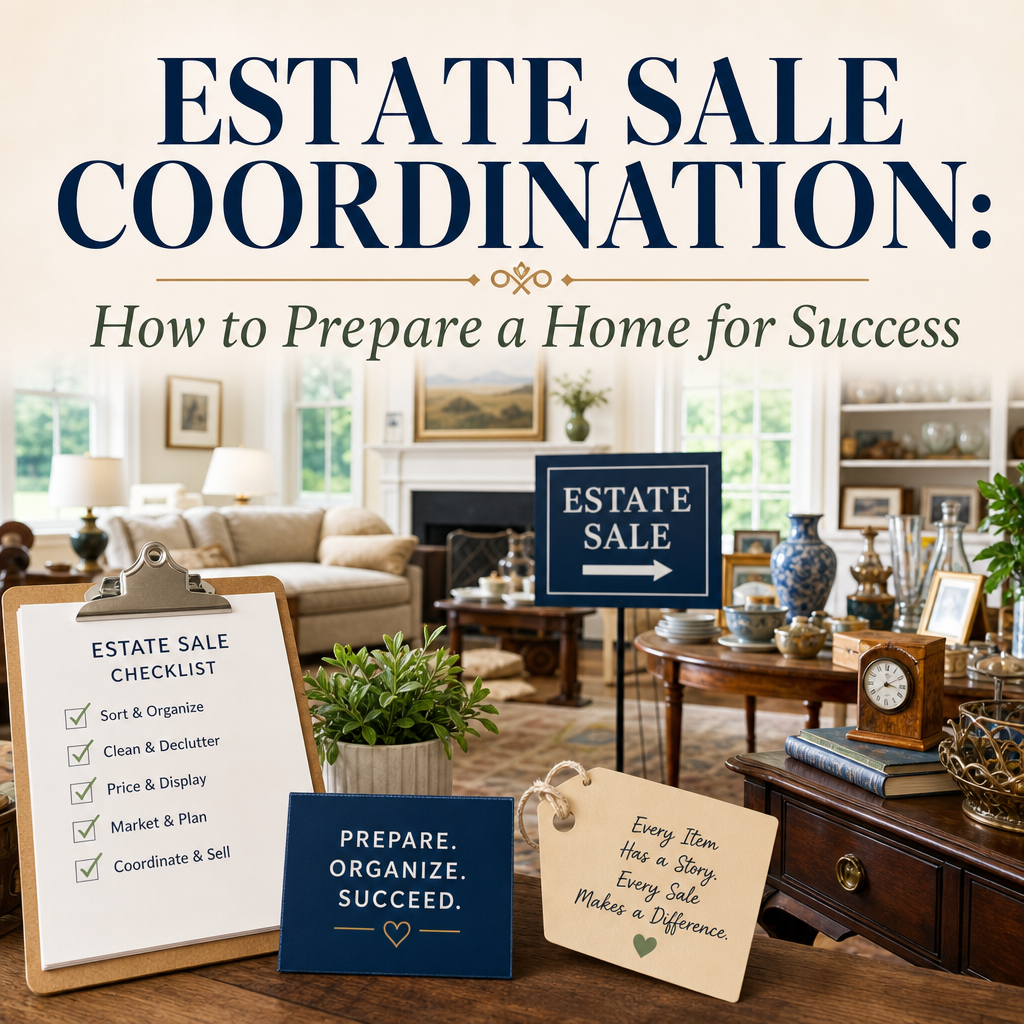
Estate Sale Coordination: How to Prepare a Home for Success
Estate Sale Coordination: How to Prepare a Home for a Successful Sale
Estate sale coordination is the process that turns a crowded, emotional, and often overwhelming home into a well-organized sale that attracts buyers and maximizes returns. Whether you are handling a loved one’s estate, downsizing, or clearing a property before listing it, the right preparation makes a major difference.
A successful estate sale is not just about pricing items and opening the doors. It requires planning, sorting, presentation, and a clear strategy. With the right approach, you can create a smooth experience for buyers while reducing stress for everyone involved.
Start With a Clear Plan
Before moving a single item, define the purpose of the sale. Are you trying to liquidate the entire home, sell only select valuables, or prepare the property for listing? Knowing the goal helps guide every decision.
Good estate sale coordination begins with a timeline. Set dates for:
- Sorting and organizing belongings
- Researching valuable items
- Cleaning and staging the home
- Advertising the sale
- Final pickup or cleanup after the sale
If possible, allow several weeks for preparation. Rushing through the process often leads to missed items, poor pricing, and a less appealing sale setup.
Sort the Home Room by Room
The easiest way to avoid chaos is to work through the house one space at a time. This keeps the process manageable and helps you stay focused.
Use simple categories such as:
- Sell
- Keep
- Donate
- Discard
- Research further
Take care with paperwork, jewelry, antiques, collectibles, and sentimental items. These often require extra review before a decision is made. It is also wise to check drawers, cabinets, closets, and storage areas carefully. Small overlooked items can add up to significant value.
If multiple family members are involved, set clear rules for what can be removed before the sale. Misunderstandings are common when several people feel entitled to the same belongings.
Identify Valuable Items
Not everything in a home should be priced the same way. Some items may have stronger resale value than others, especially if they are rare, in excellent condition, or part of a known brand or collection.
Look closely at:
- Fine jewelry
- Watches
- Artwork
- Antiques
- Vintage furniture
- Tools and equipment
- Name-brand kitchenware
- Collectibles and memorabilia
For higher-value pieces, consider getting a professional appraisal or consulting someone with estate sale experience. Accurate pricing helps prevent undervaluing important items and also avoids pricing pieces too high, which can scare away buyers.
Clean and Stage the Home
A clean, organized home is far more appealing to shoppers. You do not need to remodel or make major improvements, but basic preparation matters.
Focus on these steps:
Remove clutter
Too much clutter makes items harder to see and lowers the perceived value of the sale. Clear walkways, group similar items together, and remove anything that does not need to be sold.
Clean surfaces
Dust shelves, wipe counters, and vacuum floors. Clean items are easier to sell, even if they are pre-owned.
Improve presentation
Display merchandise in a way that feels intentional. Set dishes together, hang clothing neatly, and arrange books, décor, and tools in logical groups. A tidy layout helps buyers browse quickly and comfortably.
Address safety issues
Make sure the home is safe and accessible. Remove tripping hazards, secure loose rugs, and ensure adequate lighting. A safe environment encourages more visitors and reduces liability concerns.
Price Items Strategically
Pricing is one of the most important parts of estate sale coordination. Buyers want fair prices, but they also expect items to move quickly.
A few pricing tips:
- Research similar items online or in local resale markets
- Use clear, easy-to-read tags
- Group inexpensive items into bundles when appropriate
- Be realistic about condition and demand
Remember that the goal of an estate sale is usually to sell efficiently, not to achieve retail pricing on every item. A balanced pricing strategy helps increase total sales while reducing leftover inventory.
Promote the Sale
Even the best-organized sale needs visibility. Once the home is ready, create a simple marketing plan.
Helpful promotion methods include:
- Online estate sale listings
- Social media posts
- Local community boards
- Email lists or neighborhood groups
- Clear signage on sale day
Use photos that show the home in a clean, organized state. Highlight key categories such as antiques, furniture, tools, or collectibles. Strong advertising draws more buyers and increases the chances of a successful turnout.
Prepare for Sale Day
The day of the sale should run as smoothly as possible. Assign roles in advance if you have a team helping out. Someone should handle payments, another person may answer buyer questions, and others can monitor rooms or restock sold areas.
Keep these items ready:
- Cash box or digital payment system
- Shopping bags
- Price labels and markers
- Inventory list
- Tape or string for marking sold items
- A plan for heavy or fragile pieces
It also helps to establish clear rules for buyers, such as whether items must be removed the same day or if hold requests are allowed.
Plan for What Remains
Not everything will sell, and that is normal. A complete estate sale plan should include post-sale cleanup.
Decide in advance whether leftover items will be:
- Donated
- Disposed of
- Sold in a second clearance event
- Kept for family pickup
The faster you manage remaining items, the sooner the property can be sold, rented, or returned to normal use.
A Well-Prepared Home Sells Better
Estate sale coordination is really about making smart, thoughtful choices from beginning to end. When a home is organized, clean, accurately priced, and properly promoted, buyers notice. The result is often a smoother sale, better returns, and far less stress.
With careful preparation and a clear plan, you can turn a difficult task into a successful and manageable process.