

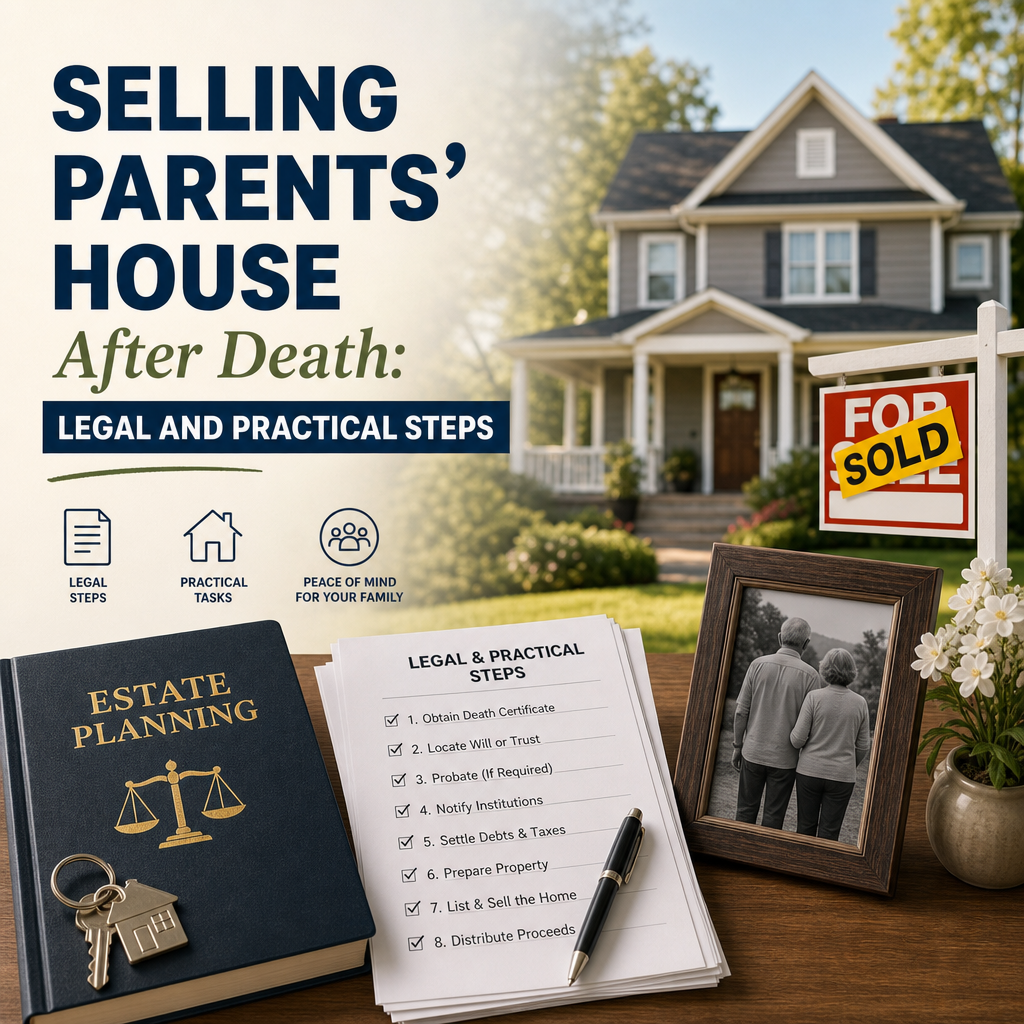
Selling Parents’ House After Death: Legal and Practical Steps
Selling Parents’ House After Death: Legal, Emotional, and Practical Steps
Selling a parent’s home after they pass away is rarely just a financial decision. It often involves grief, family dynamics, legal paperwork, and a long list of practical tasks. For many people, selling parents’ house after death becomes one of the first major responsibilities they face while still processing the loss.
The process can feel overwhelming, but breaking it into clear steps makes it easier to manage. Understanding the legal, emotional, and practical sides of the sale can help you move forward with confidence and fewer surprises.
Start With the Legal Basics
Before anything else, make sure the property can legally be sold. In most cases, the house becomes part of the deceased person’s estate, and the executor or administrator must handle the sale.
Confirm who has authority
If there is a will, the named executor usually has the right to manage the estate. If there is no will, the court may appoint an administrator. This person is responsible for making decisions about the home, paying debts, and distributing any remaining assets.
Check ownership and probate status
Find out how the house was owned:
- Sole ownership may require probate before the house can be sold.
- Joint ownership might transfer automatically to the surviving owner.
- Trust ownership may bypass probate, depending on the trust terms.
Probate rules vary by location, so it is wise to speak with a probate attorney or estate professional early in the process.
Resolve debts and taxes
The estate may need to pay off mortgages, property taxes, liens, or other debts before the sale can be completed. In some cases, inheritance tax or estate tax may also apply. These issues should be reviewed before listing the property to avoid delays later.
Handle the Emotional Side Carefully
A parent’s house is often filled with memories. Sorting through it can bring back both comforting and painful moments. It is normal to feel sadness, guilt, or even conflict during this time.
Give yourself time to grieve
If possible, avoid rushing into major decisions right away. Some families benefit from waiting a short period before clearing out the home or putting it on the market. A little breathing room can make the process less emotional and more thoughtful.
Involve family members respectfully
If siblings or other heirs are involved, communicate openly. Decide together what should happen to personal belongings, furniture, and sentimental items. Clear communication can reduce misunderstandings and prevent disputes.
A few helpful approaches include:
- Setting a timeline for decisions
- Taking photos of items before dividing them
- Allowing each person to choose keepsakes in turns
- Using a neutral third party if disagreements arise
Decide what to keep, donate, or sell
Not everything needs to be handled at once. Separate items into categories such as:
- Keep
- Donate
- Sell
- Discard
This can make the house feel less emotionally heavy and more manageable.
Prepare the House for Sale
Once the legal and emotional basics are underway, focus on making the property ready for buyers. A well-prepared home is easier to sell and may attract better offers.
Sort out personal property
Remove documents, valuables, family photos, and sentimental items first. Then clear out furniture, clothes, and household goods. If there is a large amount to handle, consider hiring an estate cleanout company or estate sale professional.
Make necessary repairs
You do not always need a full renovation, but basic repairs can improve the home’s appeal. Common fixes include:
- Patching holes
- Repairing leaks
- Replacing broken lights
- Cleaning carpets or flooring
- Painting worn walls
If the property is outdated, ask a real estate agent whether simple updates would increase value enough to justify the cost.
Get a professional valuation
Before listing, have the home appraised or compared with similar properties in the area. This helps set a realistic asking price. If the estate involves multiple heirs, a professional valuation can also support fair division of proceeds.
Work With the Right Professionals
Selling an inherited home can involve more moving parts than a standard home sale. The right support can save time and reduce stress.
Consider these professionals:
- Probate attorney for legal guidance
- Real estate agent experienced in inherited properties
- Accountant or tax advisor for tax-related questions
- Estate sale company for selling belongings
- Contractor or inspector for repairs and condition reports
If the estate is complicated, professional help is often worth the cost.
Keep the Sale Process Organized
Once the house is listed, stay on top of documents, deadlines, and offers. Keep copies of probate papers, insurance records, tax bills, and sale agreements in one place.
If the house is vacant, do not forget practical matters such as:
- Maintaining utilities
- Keeping the property insured
- Checking for damage or leaks
- Securing doors and windows
- Mowing the lawn or removing snow
An empty home can deteriorate quickly if it is left unattended.
Moving Forward
Selling parents’ house after death is never only about real estate. It is a process that combines grief, family relationships, and legal responsibility. By taking it one step at a time—first handling the legal authority, then the emotional cleanup, and finally the practical sale—you can move through the process with more clarity.
The home may no longer be in the family, but the care you bring to this transition can honor both your parents and the memories attached to the house.

